🦴
Booting the BeagleBone Black (BBB): A Beginner's Guide
A plain-English walkthrough of the BeagleBone Black's 4-stage boot process — from the built-in ROM bootloader all the way to Linux taking over.
Read More →A 16-part series. ← All Posts
A plain-English walkthrough of the BeagleBone Black's 4-stage boot process — from the built-in ROM bootloader all the way to Linux taking over.
Read More →You don't need separate BOOT and ROOTFS files for the BeagleBone Black — the official BeagleBoard.org image already has both. Here's how to flash it, boot from eMMC vs SD, and SSH in for the first time.
Read More →Most beginners skip this step and wonder why their BeagleBone Black won't boot. Here's why you need TWO SD card partitions (FAT for boot, EXT4 for root) and how to set them up in an Ubuntu VM.
Read More →
Setting up Eclipse CDT, the GNU ARM toolchain, and the Remote System Explorer plugin to cross-compile C/C++ and deploy straight to a BeagleBone Black.
Read More →
A hands-on walkthrough of GPIO on the BeagleBone Black's AM3358 — pin muxing, register decoding, and reading real pin values from the Linux command line.
Read More →
A hands-on walkthrough of debugging BeagleBone Black GPIO pins using gpioinfo and the AM335x pinmux debugfs interface.
Read More →
How to read live AM335x pinmux register values straight from the Linux kernel's debugfs interface to debug a misbehaving BeagleBone Black GPIO pin.
Read More →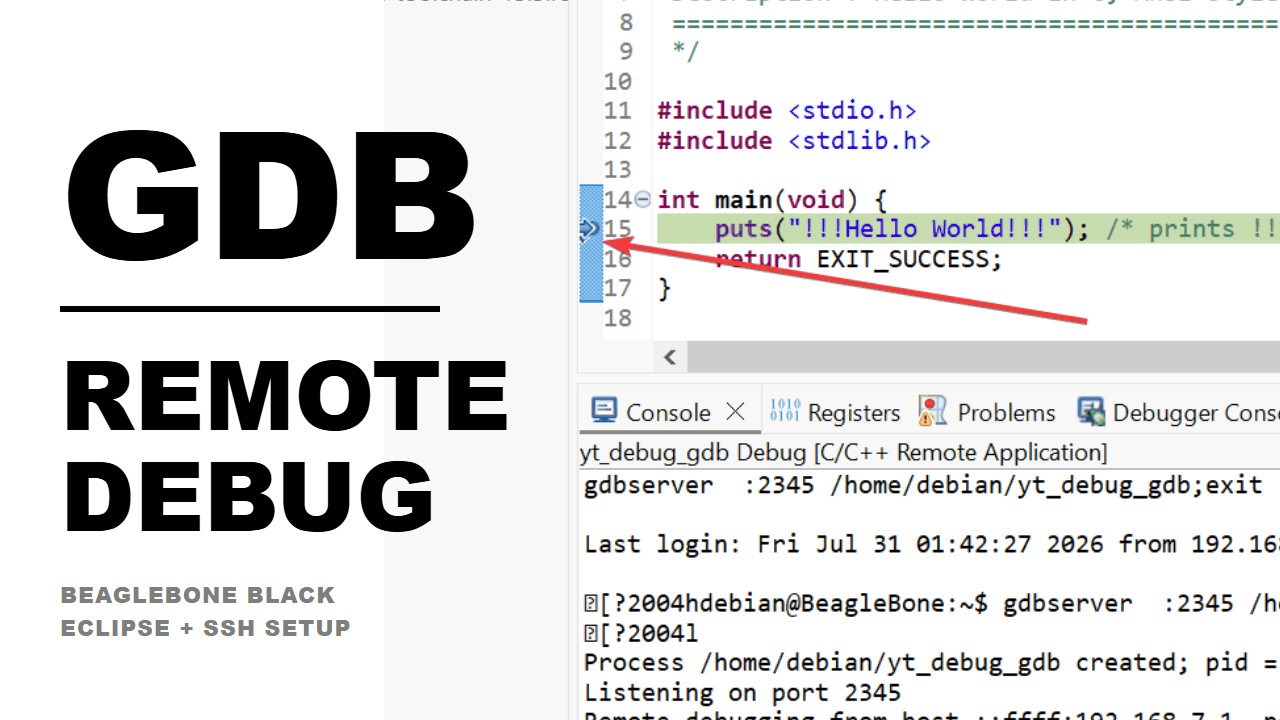
How to wire up Eclipse on Windows, a cross-compiled ARM gdb, and gdbserver on a BeagleBone Black so you can set breakpoints and inspect variables while your code runs live on the target.
Read More →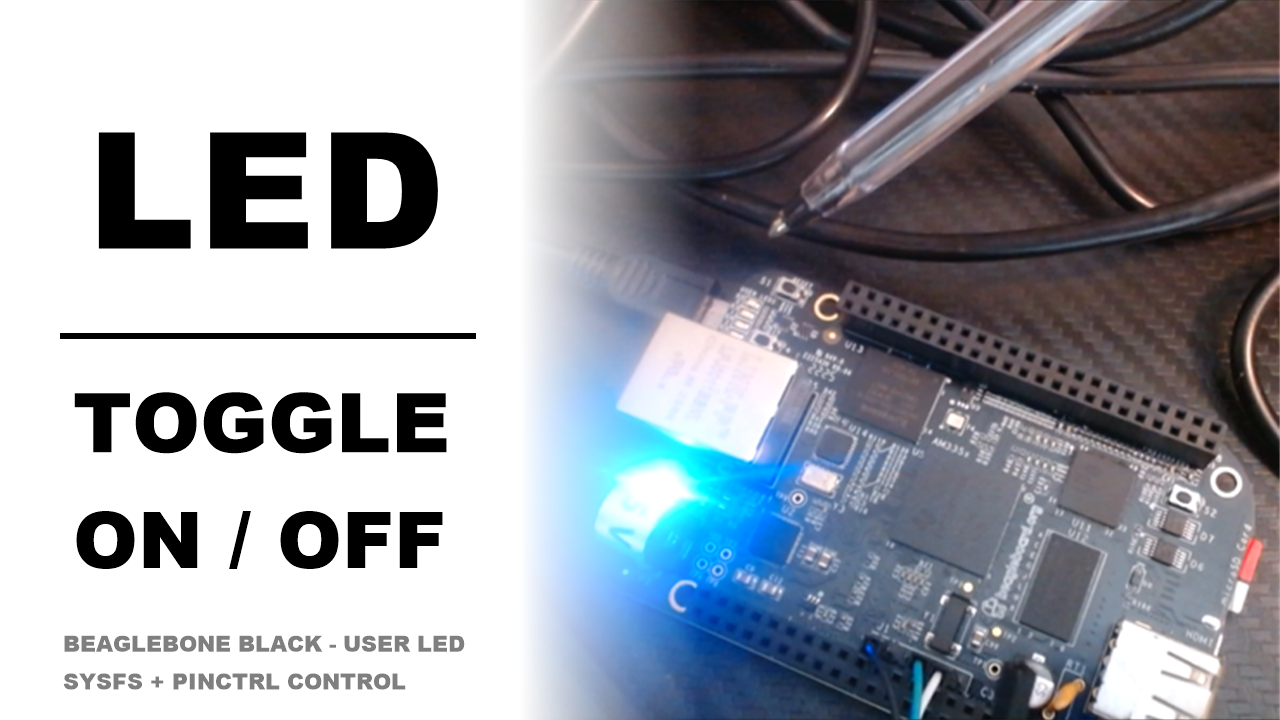
How to translate a BeagleBone Black USER LED's datasheet pin nickname into the Linux GPIO number, then toggle it through both the raw sysfs GPIO interface and the friendlier LED class interface.
Read More →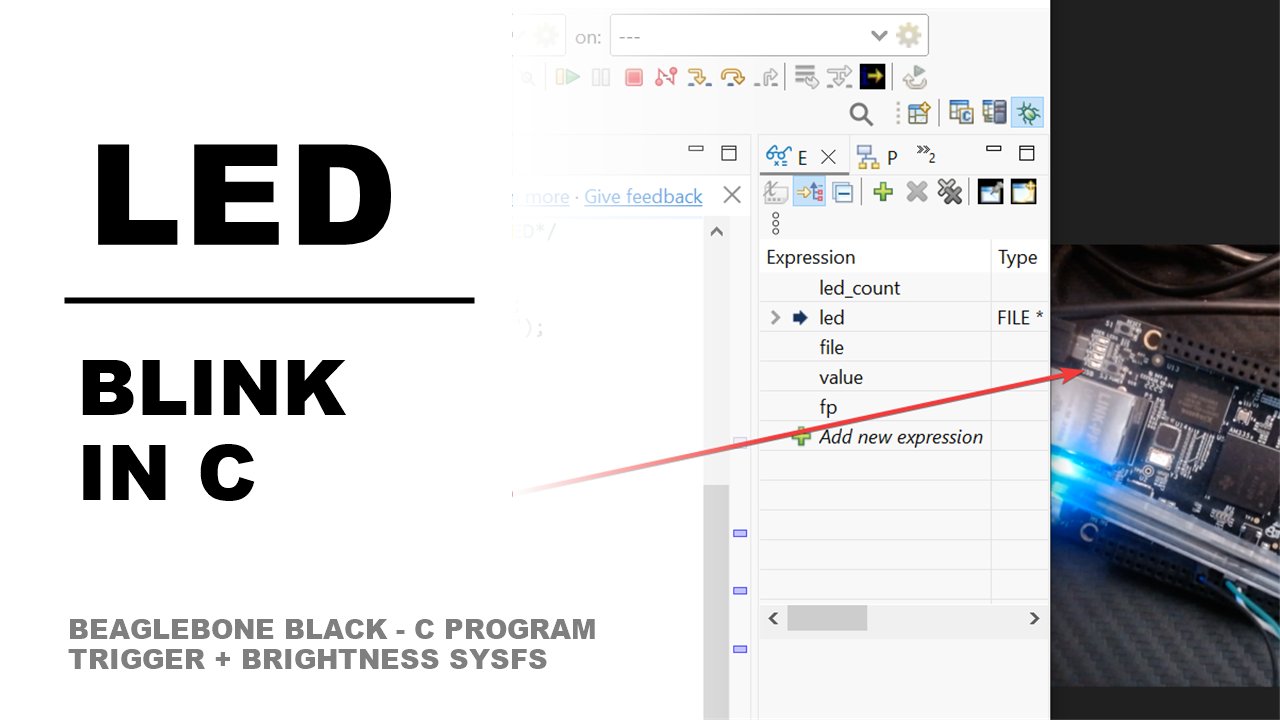
How to write a small C program that takes manual control of a BeagleBone Black USER LED through /sys/class/leds and blinks it on a 2-second loop using trigger, brightness, rewind, and fflush.
Read More →
Refactoring a single-LED sysfs blink program on the BeagleBone Black into a path array, a setup loop, and an array of FILE* handles — a C/C++ embedded systems example built and cross-compiled in Eclipse CDT, the smallest useful pattern for driving N identical sysfs devices from C.
Read More →
Building a UDP echo server and client in C with socket(), bind(), sendto(), and recvfrom() on the BeagleBone Black — the smallest working example of the Berkeley sockets API, and what actually happens (and doesn't) when a UDP packet leaves the kernel.
Read More →
Enabling SO_BROADCAST on a BeagleBone Black UDP socket to reach an entire LAN subnet, then proving delivery with a Wireshark capture on a separate Windows PC.
Read More →
Sending a C struct instead of a raw string over UDP, then triggering an independent loop on a BeagleBone Black with a single one-shot Winsock2 packet from a Windows PC.
Read More →
Moving recvfrom() inside the loop and adding a strcmp() dispatcher so a UDP command from Windows actually turns a BeagleBone Black LED on and off instead of just printing to the screen.
Read More →A comprehensive, one-page reference table mapping every P8 and P9 header pin on the BeagleBone Black to its GPIO bank/offset, Linux GPIO number, and default alternate function.
Read More →